Ankle sprains are among the most common musculoskeletal injuries, often resulting from an inward (inversion) or outward (eversion) rolling of the foot that injures one or more ligaments. In Singapore, ankle sprains usually account for up to 85% of ankle injuries.
The most frequently affected ligament in inversion sprains is the anterior talofibular ligament, one of the lateral ligaments of the ankle. Medial ligament injuries from eversion are less common but may occur in severe sprains.
There are various chronic conditions that cause ankle pain. It can be the result of an unresolved fracture, Peroneal Tendon injuries, Posterior Tibial Tendon Dysfunction (PTTD), gout, rheumatoid arthritis, Tarsal tunnel syndrome (nerve compression), infection, and poor structural alignment such as flat foot.
Patients suffering from ankle pain frequently report symptoms of swelling and pain, stiffness, and redness in the affected area. Pain can range from a dull ache to a sharp burning pain that occurs during physical activity, such as standing or walking on uneven surfaces. Depending on the severity of the sprain or injury, bruising, limited mobility, or chronic instability may also occur.

Types of Ankle Pain
Ankle pain can come in different forms, depending on the cause and area affected. Here are common types:
- Sprained ankle – Usually caused by overstretching or partial tearing of ligaments, often from twisting or rolling the ankle.
- Ankle instability – A lingering sense of weakness or the ankle “giving way,” often after repeated or moderate to severe sprains.
- Tendinitis – Inflammation of tendons around the ankle, such as the Achilles or peroneal tendons, leading to pain with movement.
- Fractures – Breaks in one or more ankle bones, such as the fibula, causing sharp pain, swelling, and difficulty bearing weight.
- Arthritis – Wear and tear (osteoarthritis) or autoimmune conditions (rheumatoid arthritis) causing stiffness and chronic pain.
- Bursitis – Inflammation of the fluid-filled sacs around the ankle joint, often from repetitive motion or pressure.
- Nerve-related pain – Such as tarsal tunnel syndrome, where nerves are compressed, leading to burning, tingling, or numbness.
Common Causes of Ankle Sprains
- Twisting, rolling, or turning the ankle inward (inversion) or outward (eversion) during movement
- Landing awkwardly from a jump, as in sports like volleyball or basketball
- Walking or running on uneven surfaces
- Wearing improper footwear, especially during physical activity
- Sudden changes in direction, often seen in athletes
- Previous injuries that weaken soft tissues and ligaments
- Lack of warm-up or poor balance before exercise
Symptoms of Ankle Sprains
- Swelling and pain around the ankle joint
- Bruising or discolouration of the skin
- Pain when bearing weight or touching the area
- Limited range of motion or stiffness
- Instability or the feeling that the ankle might give way
- Popping or snapping sensation at the time of injury
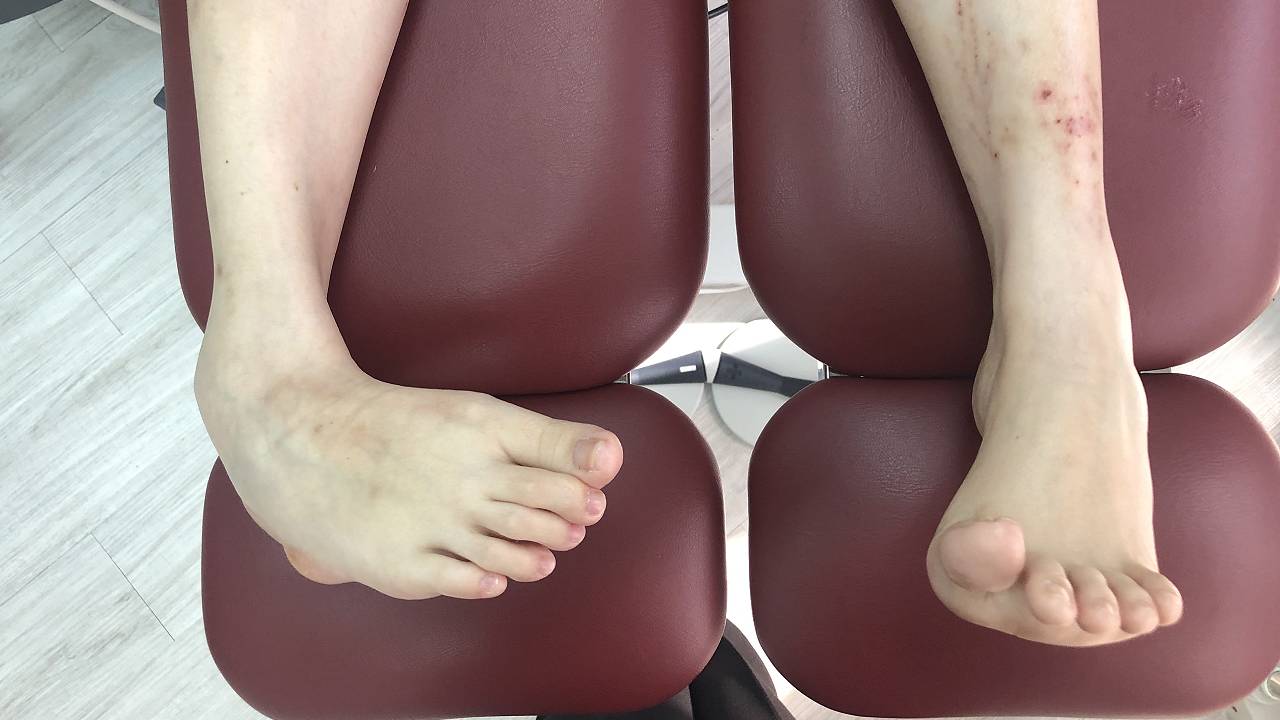
Ankle Sprain Management and Prevention
Managing Sprained Ankles
A sprained ankle can range from mild to severe. Acute ankle sprains benefit from early care to reduce swelling and promote healing:
- Rest and avoid putting weight on the injured ankle
- Apply ice to manage acute inflammation in the first 48 hours
- Use compression bandages or a brace to support the area
- Elevate the ankle to reduce swelling
- Non-steroidal anti-inflammatory medication may be used to alleviate pain and inflammation
- Shockwave therapy is typically recommended when pain and swelling persist despite rest
- Return to movement with progressive exercises that restore strength and mobility
However, if the injured ankle shows signs of chronic instability or pain worsens, it is crucial to consult a podiatrist. Depending on the severity of the sprain—ranging from Grade I to Grade III sprains—management may require immobilisation or advanced care. Diagnostic imaging may be needed to rule out fractures and assess ligament or soft tissue damage.
Rehabilitation is crucial in managing sprained ankles, especially for moderate to severe sprains. A targeted exercise plan supports restoration of function and may prevent recurrence.
Preventing Ankle Sprains
Whether you’re active or just on your feet often, prevention helps avoid re-injury:
- Warm up before exercise or physical activity
- Strengthen ankle and lower limb muscles
- Practise balance and proprioceptive exercises
- Choose footwear with good support
- Be cautious on uneven surfaces
- Address recurring issues early—some severe sprains may require bracing or structured rehabilitation to avoid chronic instability
Get Relief from Ankle Pain at East Coast Podiatry
Since the cause of ankle pain is often ambiguous, it is important for those with ankle concerns to seek professional care. Our podiatrist at East Coast Podiatry can perform a detailed foot assessment using diagnostic tools like musculoskeletal ultrasound to evaluate ligament and soft tissue structures, blood vessels, and joints.
Most ankle sprains and injuries usually heal with non-invasive options provided at our centre. For cases involving severe soft tissue damage or instability that may require surgical intervention, patients will be referred to a trusted foot and ankle doctor.
Common conditions linked to ankle pain include:
- Achilles tendon rupture
- Arthritis
- Gout
- Fracture
- Peroneal tendon injuries
- Posterior tibial tendon dysfunction
- Tarsal tunnel syndrome (nerve compression)
It is advised by ankle specialists and podiatrists to address your ankle pain and sprains promptly. Failure to do so can lead to irreversible deformities of the foot and ankle, and even cause disabilities that negatively affect your quality of life.
To prevent this, see a podiatrist if you have experienced multiple ankle sprains, or frequent ankle instability and weakness.
Frequently Asked Questions
An ankle sprain is an injury of the ligaments around the ankle due to excessive rolling or twisting. When this occurs, the ligaments are stretched beyond their normal range of motion, and in severe cases, may result in the tearing of the ligament. Ankle sprains are the most common ankle injury in Singapore.
While ankle sprains are usually caused by a single event, such as a fall, landing awkwardly after a jump, or having someone step or land on your foot, there are often underlying causes that contribute to ankle sprains. This may include, previous ankle injury, poor footwear choices or a lack of flexibility or strength in the ankle. Previous ankle injuries are a major culprit as they weaken your ankle, hence increasing the incidence of such injuries. To avoid this from occurring, consult an ankle specialist or podiatrist to see what are the options are available for you.
You usually know when you have sprained your ankle because of the very noticeable twisting or turning motion. Other common symptoms can include:
- Pain, particularly upon weight-bearing
- Soreness and/or tenderness
- Swelling
- Bruising
- Restricted range of motion
- Popping sensation or sound at the time of injury
If the pain persists over a prolonged period of time, or greatly intensifies upon weight bearing, the ankle may have been fractured rather than sprained. You should always consult a podiatrist or lower limb specialist to ensure that there is no lasting damage.
While ankle injuries can heal on their own, they often heal incorrectly or in a manner that encourages future injury.
A severe ankle sprain may take several months to fully recover. If neglected, complications such as chronic ankle instability or even ankle arthritis may occur. Therefore, it is important to address the underlying cause of these injuries in order to implement appropriate preventive measures.
Depending on the severity and type of injury, the course of action for ankle sprains can range from applying R.I.C.E to the affected area, to using crutches or splints, to using electromagnetic stimulation to help facilitate recovery.
For both mild and severe injuries, physical therapy may be prescribed for rehabilitation purposes. Surgical intervention is rare, and is typically only offered if there is significant bone deterioration or if conservative methods have failed to stabilise the ankle joint after an extended period of therapy.
Surgery is rarely required for ankle sprains as the ligaments of the ankle can remodel themselves. Nonetheless, you should seek help from a foot specialist or podiatrist to avoid injury progression and future injury.